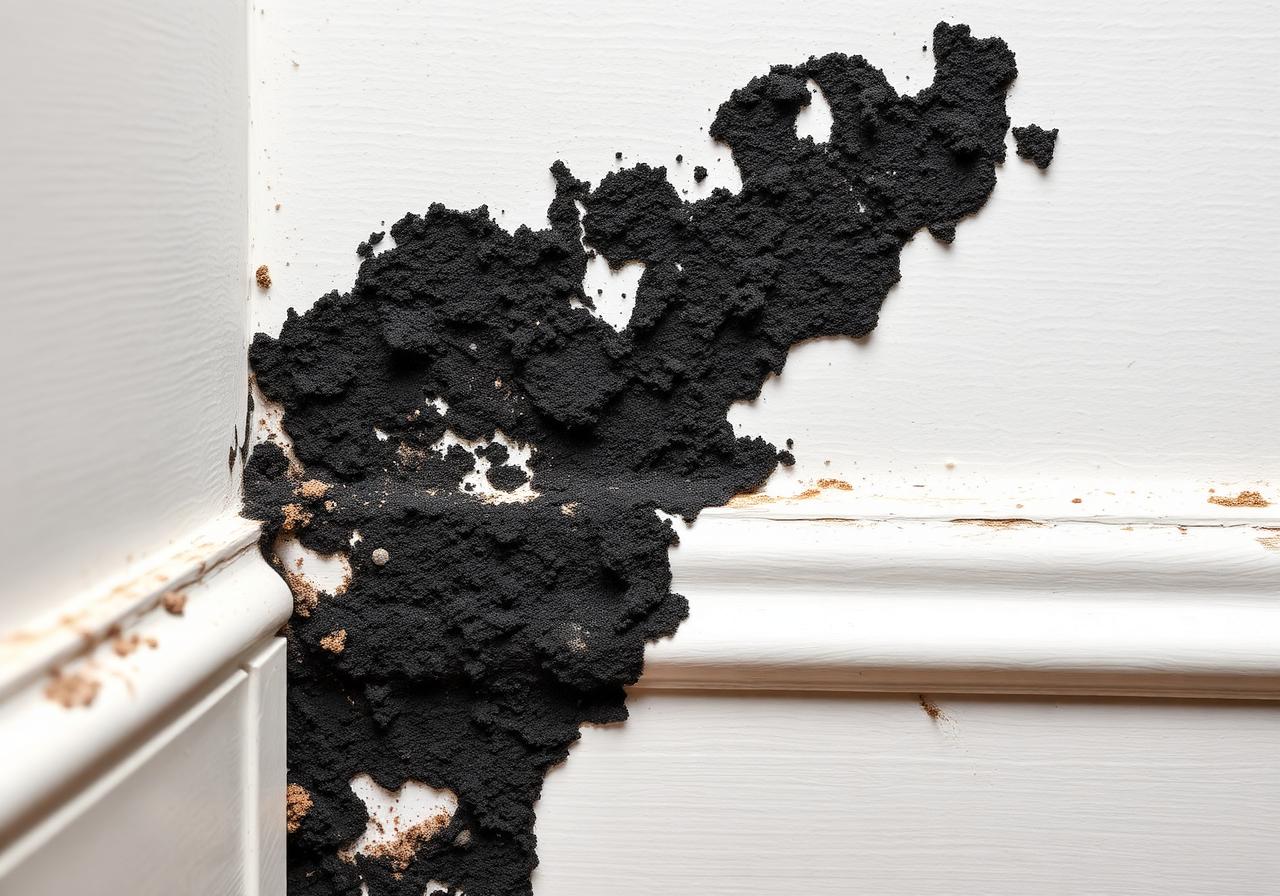
Mold and mildew are both fungi. That's where the similarity ends. Mildew is a flat surface grower that lifts off with a cloth. Mold is a colonizer that digs in, damages materials, and can affect your health. Calling one the other is how small problems become expensive ones.
The 60-second visual test
| Feature | Mildew | Mold |
|---|---|---|
| Texture | Flat, powdery, or fluffy | Fuzzy, slimy, or raised; visible depth |
| Color | White, gray, or yellow | Black, green, brown, dark gray, pink, or orange |
| Surface | Sits on top, lifts off when wiped | Grows into material, staining remains after wiping |
| Smell | Mild, slightly musty | Strong musty, earthy, sometimes sweet or chemical |
| Where | Tile grout, shower curtains, window sills | Drywall, wood, insulation, fabric, carpet |
| Damage | Cosmetic only | Structural: rots wood, ruins drywall |
| Health | Mild allergen | Allergen, irritant, and (some species) toxic |
The wipe test (do this first)
Put on disposable gloves. Spray the spot with white vinegar or a 1:10 bleach-water mix. Wait one minute. Wipe firmly with a paper towel.
- Comes off completely, no staining: mildew. Finish cleaning, improve ventilation, you're done.
- Surface lightens but stain remains: probably mold. The colony has grown into the material.
- Doesn't change much: mold, and likely on a porous surface (drywall, wood, grout) where wiping can't reach the roots.
Where you typically find each
Mildew lives on
- Shower curtains and shower door tracks
- Tile grout (especially the bottom row near the floor)
- Bathroom window sills and frames
- Leather goods stored in damp basements
- Books and paper in humid rooms
Mold lives in (and on)
- Drywall and paint, especially behind furniture against exterior walls
- Wood framing and subfloor
- Carpet padding after any water event
- Attic sheathing under ice-dammed roofs
- HVAC ductwork and evaporator coils
- Inside walls, behind baseboards, under sinks
How to clean mildew yourself
- Ventilate the room (open a window or run the fan).
- Wear gloves and a basic dust mask, even mildew can irritate.
- Spray with white vinegar (full strength) or a 1:10 bleach-water mix.
- Wait 5 to 10 minutes.
- Scrub with a stiff brush, rinse, and dry thoroughly.
- Run the bath fan for 30 minutes after.
Why "mildew" is sometimes really mold
People call any white or gray surface growth "mildew" because mildew sounds harmless. But early-stage Aspergillus and Penicillium colonies can look powdery and white before they darken, and that growth on bathroom drywall is mold, not mildew. The wipe test is what settles it, not the color.
When to stop cleaning and call someone
- It comes back within a week of cleaning, the moisture source is still there
- The patch is larger than 10 square feet (EPA guidance for professional remediation)
- You smell musty odor with no visible source
- Material is soft, crumbling, or stained dark through and through
- Anyone in the home has asthma, allergies, or a compromised immune system
The prevention rule that handles both
Below 50% indoor relative humidity, mildew slows dramatically and mold can barely grow. A $15 hygrometer plus a working bath fan and a basement dehumidifier eliminates 90% of household fungal problems. The other 10% is leaks, those need actual repairs, not cleaning.
Worried about mold in your home?
Free on-site inspection across the Minneapolis metro. IICRC certified, fully insured, and we'll give you a straight answer, not a sales pitch.