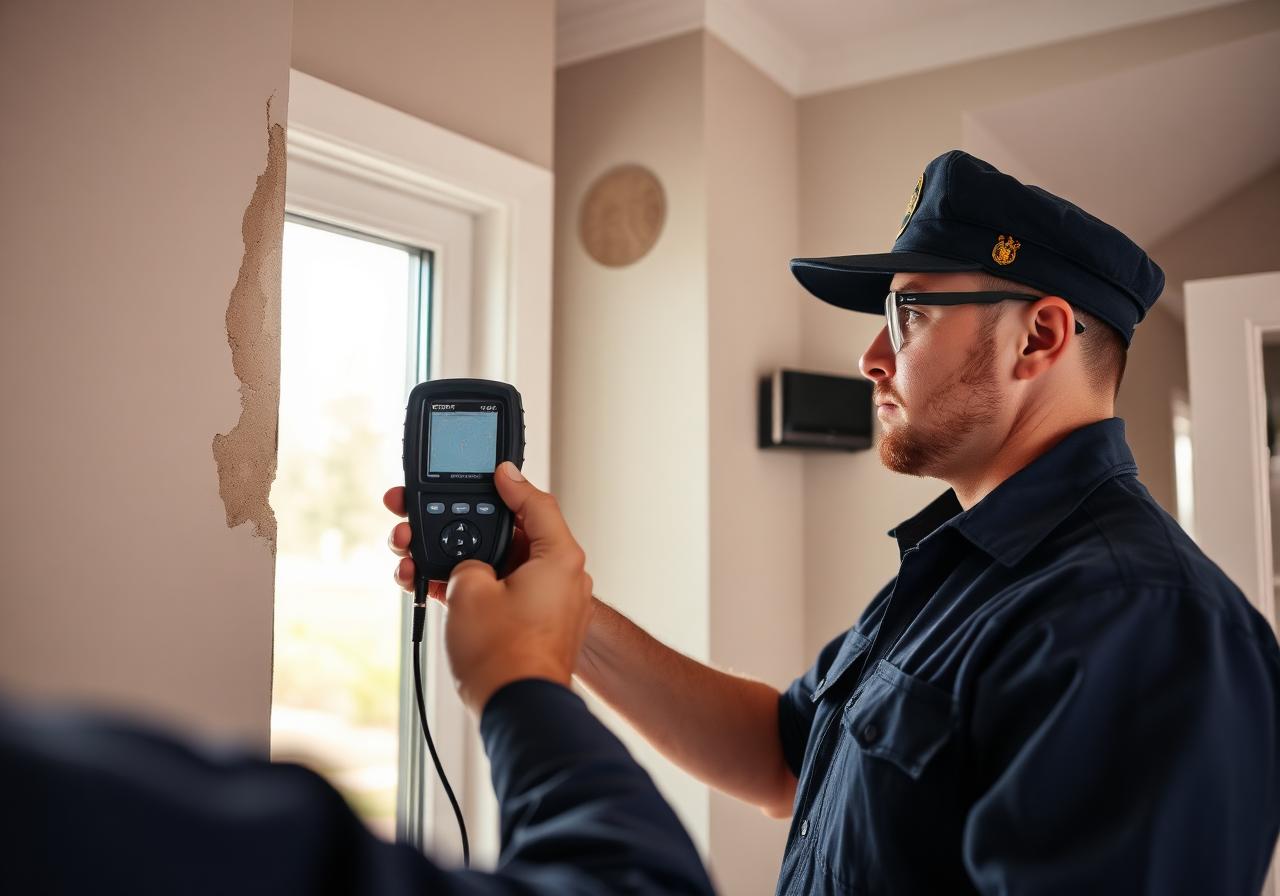
There are three ways to test for mold: look for it, smell for it, or sample for it. Which one you need depends entirely on what you already know. Here's the decision tree, what each method actually measures, and how to read the lab report when it comes back.
Step 1: Do you actually need a test?
If you can already see mold and it's more than about 10 square feet, the EPA's guidance is clear: skip the test and arrange remediation. Testing visible mold rarely changes the cleanup plan. You'd test when mold is hidden, suspected, or already removed and you need to prove the cleanup worked.
The 4 types of mold tests
1. DIY petri dish (settle plate) kits, $10 to $30
You expose a petri dish to room air for an hour, close it, and wait days for mold to grow. Almost every dish grows something, because spores are everywhere outdoors. These kits cannot measure concentration, identify species reliably, or distinguish indoor problems from normal background. Skip these, they create false confidence and false alarms.
2. DIY tape-lift or swab kits with lab analysis, $40 to $100
You press clear tape to a suspicious surface, mail it to a lab, and get a species ID. Useful when you have visible growth and want to know if it's the dangerous kind before deciding on cleanup. Doesn't tell you about hidden mold, only what's on that one surface.
3. Professional air sampling, $400 to $600 typical job
A calibrated pump pulls a known volume of air through a spore trap. The lab counts spore types per cubic meter and compares your indoor reading to an outdoor control sample taken the same day. This is the gold standard for finding hidden mold and measuring how bad the problem is.
4. Post-remediation verification (PRV) testing, $200 to $400
The same air sampling, done after the remediation is finished and the containment is still up. Your indoor count should be the same or lower than outdoors. This is what your insurance company and your real estate agent want to see in writing.
Air sampling vs. surface sampling, in plain English
| Question | Best test |
|---|---|
| "Is this black stuff dangerous?" | Surface (tape lift or swab) |
| "Is there hidden mold somewhere?" | Air sampling |
| "Did the cleanup actually work?" | Air sampling (PRV) |
| "How concentrated is the problem?" | Air sampling |
| "What species am I dealing with?" | Both, surface is cheaper and faster |
How to read a lab report
You'll get spore counts in spores per cubic meter (s/m3) for each species. There's no federal exposure limit, so labs use comparative analysis:
- Indoor count higher than outdoor for the same species, especially water-damage indicator molds (Stachybotrys, Chaetomium, Aspergillus, Penicillium), means active growth indoors.
- Indoor count similar to or lower than outdoor usually means no active indoor source, your indoor counts reflect what's blowing in from outside.
- Water-damage indicator species at any level above outdoor: investigate further, these don't belong in indoor air at meaningful concentrations.
What to do before the inspector arrives
- Don't run air purifiers or open windows for 24 hours before sampling, you'll skew the reading
- Don't clean or disturb suspected areas
- Write down where you smell musty odors and when (morning, after rain, etc.)
- Note any moisture history: leaks, floods, ice dams, condensation
- Have the inspector sample the area you're worried about AND a "normal" room as an indoor reference
When to skip testing entirely
If you can see large patches of mold, you already know enough. Spending $500 to confirm what your eyes already told you delays cleanup and feeds spores into your air for another week. Same goes if your basement obviously flooded or your roof obviously leaked. Test when the answer is genuinely uncertain, not to delay action.
Free inspection in Minneapolis
We do free in-home inspections across the Twin Cities. If we find an obvious visible problem, we'll tell you to skip testing and just remediate. If the situation is genuinely uncertain, we'll explain exactly what sampling would tell you and what it would cost before we recommend it.
Worried about mold in your home?
Free on-site inspection across the Minneapolis metro. IICRC certified, fully insured, and we'll give you a straight answer, not a sales pitch.