"Called at 9 PM after finding black mold in our basement. They were here the next morning, walked us through everything, and the air smelled fresh again within days."

Serving Longfellow, Minneapolis
Mold removal in Longfellow, Minneapolis
Mold remediation across Longfellow, Cooper, Howe, Hiawatha, and Standish. Basement flooding, bathroom mold, insurance-documented.
- 24/7 emergency response
- IICRC certified team
- Licensed & fully insured
- 5-star local reviews
IICRC Certified
Licensed & Insured
24/7 Emergency Service
Free Inspection
Longfellow, Minneapolis
Longfellow homes often have mold where old masonry, creek moisture, and later remodels meet. In Cooper, Howe, Hiawatha, and near Minnehaha Creek, we see 1910-1940 bungalows with block-and-stone basements that were never meant to stay dry behind drywall.
A free inspection looks past the surface stain. We check basement walls, rim joists, crawl spaces under additions, and attic areas that owners often cannot reach. If you searched mold removal longfellow minneapolis after finding a musty room or stained joist, the cause may be older than the stain itself.
Creek-area basements with block, stone, and steady moisture
Homes near Minnehaha Creek and the lower parts of Hiawatha can have damp basement walls for months at a time. Old limestone, block, and mortar joints pull in moisture, then release it into stud bays, storage rooms, and laundry areas. Paint bubbles, base trim swells, and cardboard boxes get that soft, musty smell.
We start by finding the wet side of the wall, not just the mold side. That may mean checking grading along 46th Avenue, older clay drain tile, short downspouts, or a cracked floor-wall joint. Inside, mold removal may include containment, HEPA air filtration, removal of wet drywall or paneling, and cleaning exposed framing and masonry.
There is a tradeoff with older basements. You can finish them, but they need air space, drainage planning, and a dehumidifier sized for the room. Tight drywall against damp block fails again.
Un-vented crawl spaces and hidden attic staining in Longfellow additions
Many Longfellow bungalows picked up rear kitchens, mudrooms, or porch additions over the years. Some sit over shallow crawl spaces with no real venting, bare soil, old fiberglass, and plumbing lines running through cold air. Mold grows on joists when warm house air leaks down and hits cold wood.
Attics bring a different problem. A lot of 1920s and 1930s homes in Howe and Cooper do not have walk-up attic access. Owners may see no issue until a bath fan stains the ceiling or roof decking shows black marks during a sale inspection. Ice dams add to it, since snow melt can back up under shingles and wet the sheathing.
We inspect from small hatches when possible and use photos so you can see what we see. Work may include removing wet insulation, cleaning roof decking, sealing air leaks, and correcting fan venting to the exterior.
DIY finished basements from the 2000s can trap mold behind studs
We see many Longfellow basements finished around the 2000s with standard wood studs, fiberglass batts, plastic vapor barrier, and carpet over concrete. Those materials looked clean at first. After a few wet springs, moisture had nowhere to go, so mold grew behind the walls while the painted face still looked fine.
Signs are small at first. A musty smell after rain, rust on tack strips, dark marks behind baseboards, or drywall that feels cool and soft near the floor. If the basement has a sump, we also check whether the pump pit is sealed and whether discharge water is being sent far enough from the foundation.
For removal, we may cut test openings before taking down whole walls. That keeps the work tied to the damage. Salvageable framing can often be cleaned and dried, but wet drywall, carpet pad, and moldy insulation usually need to come out.
Services
Mold problems we solve in Minneapolis
From a single moldy bathroom wall to whole-basement remediation, every job handled by certified, insured technicians.
Mold Inspection & Testing
Air and surface testing with certified lab analysis.
Learn more about Mold Inspection & Testing
Mold Removal & Remediation
Full containment, removal, and HEPA air scrubbing.
Learn more about Mold Removal & Remediation
Black Mold Removal
Safe removal of toxic Stachybotrys (black mold).
Learn more about Black Mold Removal
Basement Mold Removal
The #1 mold problem in Minneapolis homes, solved.
Learn more about Basement Mold Removal
Attic Mold Removal
Roof leak and ventilation mold treated and sealed.
Learn more about Attic Mold Removal
Real Minneapolis Jobs
Before & after
Local homes, real results. Every job documented with photos, lab reports, and clearance testing.
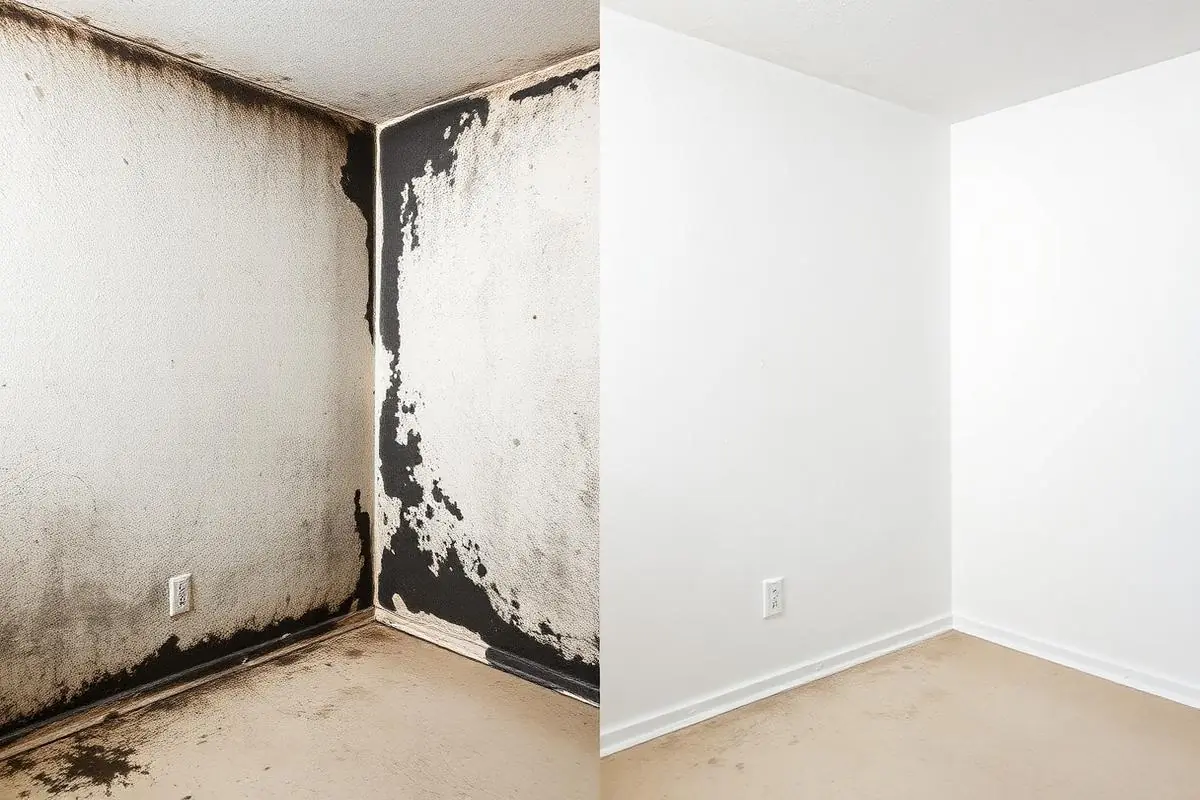
Basement drywall, South Minneapolis
Heavy mold removed and surface restored after spring flooding.
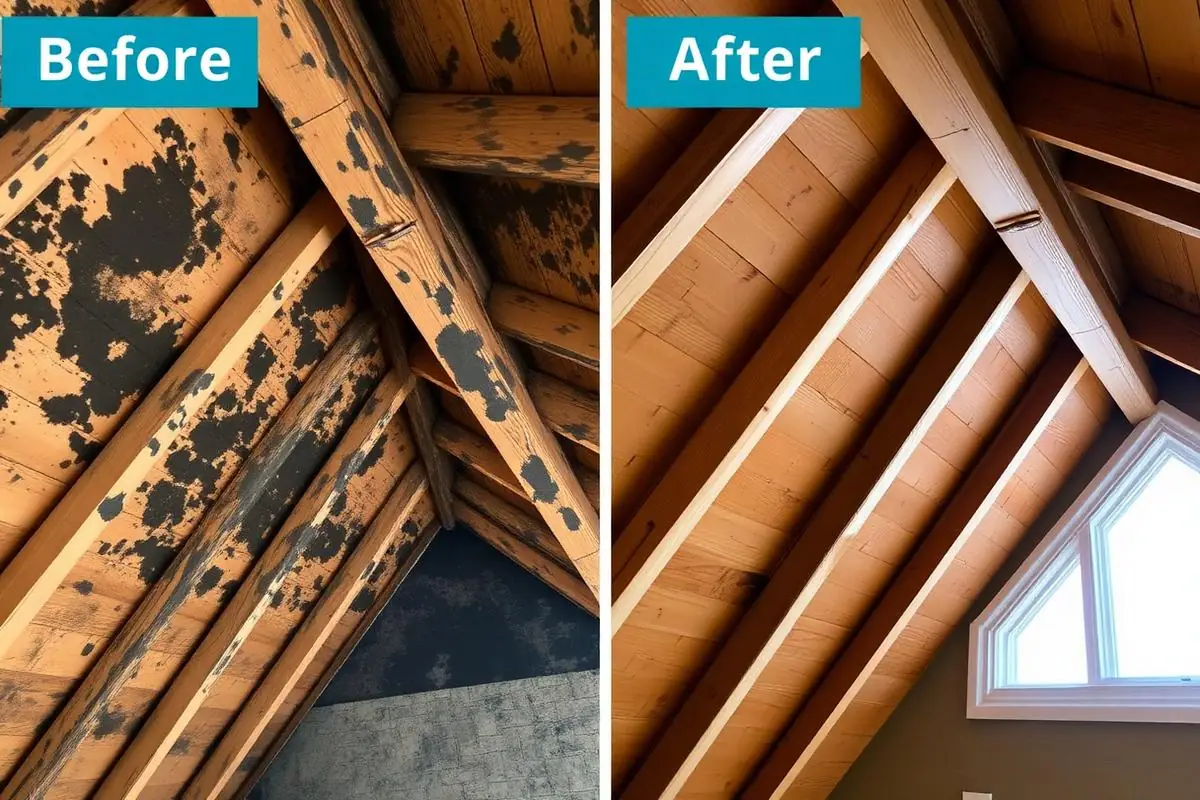
Attic sheathing, Edina
Ventilation issue corrected, sheathing treated and sealed.
5-Star Reviews
Trusted across the Twin Cities
4.9from 380+ local homeowners
"Honest pricing and no scare tactics. Other companies wanted $8k, these guys did the job properly for less than half that and showed me the lab results."
"We had attic mold from an old roof leak. The team handled insurance paperwork and the workmanship warranty gave us real peace of mind selling the house."
Service Area
Serving Minneapolis & the Twin Cities Metro
Locally owned. Same-day response across the metro, no out-of-state subcontractors, ever.
FAQ
Common questions, straight answers
Do Longfellow homes near Minnehaha Creek always need basement mold removal?+
No. Some creek-area basements stay dry enough with good grading, working gutters, and a steady dehumidifier. We look for active moisture in block, stone, wood framing, and finished walls before we call it a mold removal job.
Can you inspect an attic in a 1920s Longfellow bungalow with no walk-up stairs?+
Yes. Many Cooper and Howe homes only have a small hatch or closet access. We use lights, cameras, and safe entry methods when the framing allows it, then show photos of roof decking, insulation, fan ducts, and ice-dam staining.
Why does my finished basement smell musty only after rain?+
That often means moisture is entering through the block wall or floor-wall joint, then getting trapped behind studs or under carpet pad. In 2000s DIY finishes, plastic and fiberglass can hold that damp air in place. The wall face may look clean while mold is growing behind it.
What happens during a free mold inspection in Longfellow?+
We check the areas that match the age and layout of the home, including block-and-stone basement walls, crawl spaces under additions, rim joists, and attic access points. We use moisture readings, visual checks, and photos. After that, we explain what needs removal, what can be cleaned, and what moisture source has to be fixed.
We work the whole Twin Cities metro. Wherever you are, the job usually starts with a mold inspection and moves into removal and remediation. Curious about price? See Minneapolis mold removal cost. City-side, try a neighborhood page like Nokomis. Or a specialty scope like attic mold from a roof leak.
Browse the site
Everything we cover for Minneapolis homeowners
Pricing by job type, neighborhood-specific pages, and specialty scopes. Pick what looks like your situation.
Pricing
2026 Minneapolis mold pricing guides
Neighborhoods
Minneapolis neighborhood mold removal
- Nokomis
- Northeast Minneapolis
- Powderhorn
- Linden Hills
- Camden
- Uptown
- Kenwood
- Whittier
- Loring Park
- Marcy-Holmes
- Como
- Prospect Park
- Seward
- Cedar-Riverside
- Bryn Mawr
- Fulton
- Kingfield
- Standish-Ericsson
- Windom
- Highland Park, St. Paul
- Mac-Groveland, St. Paul
- Como (St. Paul), St. Paul
- Morningside, Edina
- Country Club, Edina
- Cahill, Edina
- Elmwood, St. Louis Park
- Fern Hill, St. Louis Park
- Browndale, St. Louis Park
- East Richfield, Richfield
- West Richfield, Richfield
- Central Richfield, Richfield
- East Bloomington, Bloomington
- West Bloomington, Bloomington
- Oxboro, Bloomington
- The Preserve, Eden Prairie
- Hidden Ponds, Eden Prairie
- Bearpath, Eden Prairie
- Glen Lake, Minnetonka
- Groveland, Minnetonka
- Burwell, Minnetonka
- Bass Lake, Plymouth
- Parkers Lake, Plymouth
- Medicine Lake, Plymouth
- Arbor Lakes, Maple Grove
- Rush Creek, Maple Grove
- Weaver Lake, Maple Grove
- Cedar Grove, Eagan
- Lexington-Diffley, Eagan
- Central Park, Eagan
- Heart of the City, Burnsville
- Sunset Pond, Burnsville
- Southcross, Burnsville
- Powers Lake, Woodbury
- Wedgewood, Woodbury
- Stonemill Farms, Woodbury
- Central Park, Roseville
- Owasso, Roseville
- Langton Lake, Roseville
Specialty jobs
Specialty mold services in Minneapolis
Mold won't wait. Neither do we.
Call now for a free inspection. A certified Minneapolis technician will be at your door, often the same day.