"Called at 9 PM after finding black mold in our basement. They were here the next morning, walked us through everything, and the air smelled fresh again within days."

Crawl space mold removal
Crawl space mold removal in Minneapolis
Damp Minneapolis crawl spaces breed mold that migrates upstairs. We clean, encapsulate, and fix the moisture source. Free inspection.
- 24/7 emergency response
- IICRC certified team
- Licensed & fully insured
- 5-star local reviews
IICRC Certified
Licensed & Insured
24/7 Emergency Service
Free Inspection
A vented crawl space under a Minneapolis porch or rear addition can grow mold for years before anyone sees it. These spaces often sit on bare soil, a thin cracked slab, or old plastic that stopped doing its job years ago.
That mold does not stay put. Warm air rising through the house pulls crawl space air up through rim joists, plank subfloors, pipe gaps, and old balloon-framed walls. Our crawl space mold removal minneapolis work is built around that full path, from cleanup to moisture control.
Why Minneapolis crawl spaces under porches and additions grow mold
Many South Minneapolis and Northeast homes have crawl spaces that were added after the main house was built. A three-season porch gets enclosed, a kitchen gets pushed out 8 feet, or a rear mudroom gets built over short foundation walls. The space below is often vented to the yard, with dirt on the floor and fiberglass stuffed between old joists.
That setup pulls in wet summer air from outside. The earth below adds more moisture. In winter, cold rim joists and subfloor boards can hold condensation near the sill plate. Once the wood stays damp, mold grows on pine joists, plank subfloor, plywood patches, and paper-faced insulation.
Most homeowners never open the access hatch. By the time there is a musty smell in the dining room or porch, the crawl space may have years of growth on the framing.
How crawl space mold moves upstairs through stack effect
A crawl space can look separate from the living space, but air does not treat it that way. In a heated Minneapolis home, warm air rises and leaks out near the upper floors and attic. That pull brings air from the lowest parts of the house, including the crawl space.
The path is often easy to find. Air moves through gaps around old cast iron drains, water lines, electrical holes, rim joists, and the edges of plank subfloor. In 1920s homes near Powderhorn or Nokomis, we often see open chases that run from the basement or crawl space into wall cavities above.
That means moldy air, damp soil odor, and fine debris can move into the rooms above. Cleaning the porch floor or running an air purifier upstairs may help the smell for a short time, but it does not stop the pull from below.
Why a partial crawl space cleanup does not hold
A full crawl space mold job starts with source control. We remove old plastic, wet fiberglass, fallen debris, and any insulation that is holding moisture against the subfloor. Then we clean and scrape mold from joists, beams, sill plates, and the underside of the floor. HEPA vacuuming and treated surface work matter, but they are only part of the fix.
The ground still has to be sealed. We install a thick vapor barrier over the earth, run it up the foundation walls, overlap and tape the seams, and seal it at piers and penetrations. Thin 6 mil plastic with loose edges will move, tear, and let soil moisture back into the space.
After encapsulation, the crawl space needs an air plan. Some spaces can keep passive vents if moisture readings stay low. Others need a small dehumidifier with a drain line. Scraping mold without fixing soil moisture, bad insulation, and air movement is why the growth comes back.
Our Process
How we remove mold safely, in 4 steps
No guesswork. No upsells. A clear, certified process from first call to final clearance test.
1. Call or Request Quote
Tell us what you're seeing. We respond in 15 minutes or less, 24/7.
2. Free On-Site Inspection
A certified technician inspects, tests, and identifies the source.
3. Containment & Removal
We seal off the area, remove contaminated materials, and HEPA scrub the air.
4. Clearance & Warranty
Final air test confirms safe air quality. Workmanship warranty included.
Real Minneapolis Jobs
Before & after
Local homes, real results. Every job documented with photos, lab reports, and clearance testing.
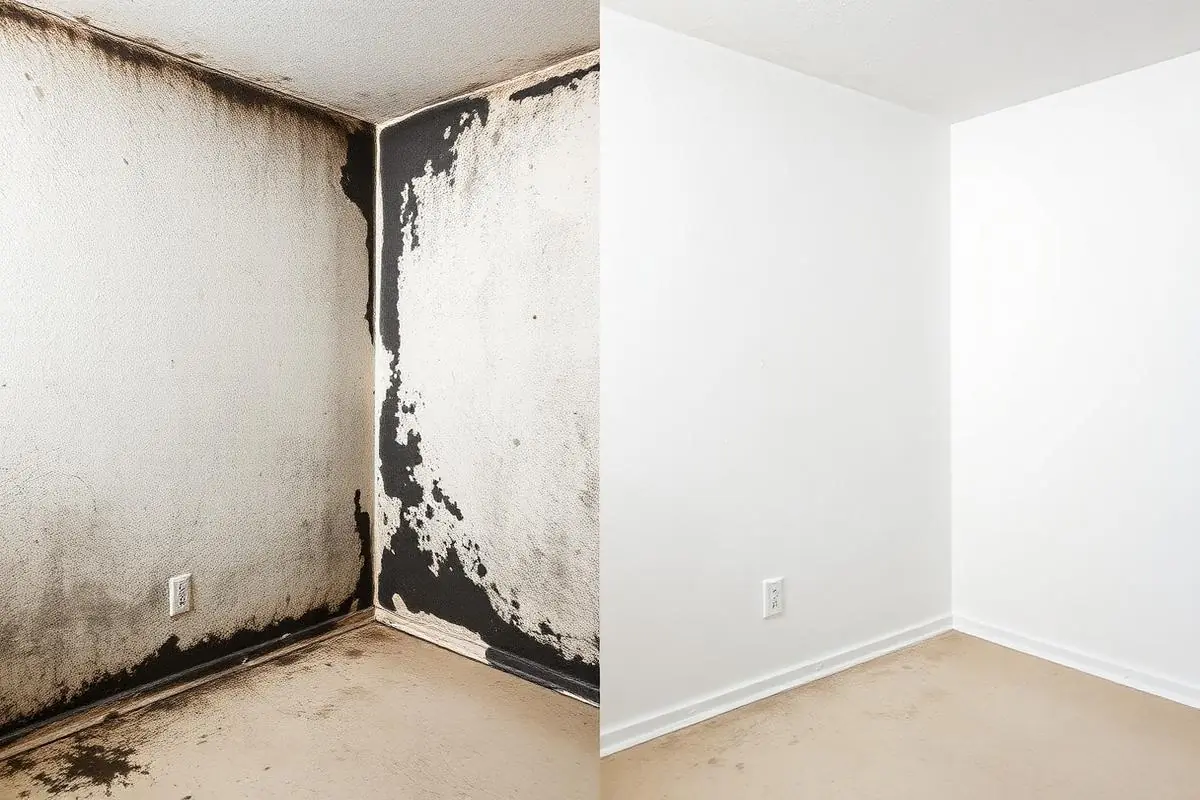
Basement drywall, South Minneapolis
Heavy mold removed and surface restored after spring flooding.
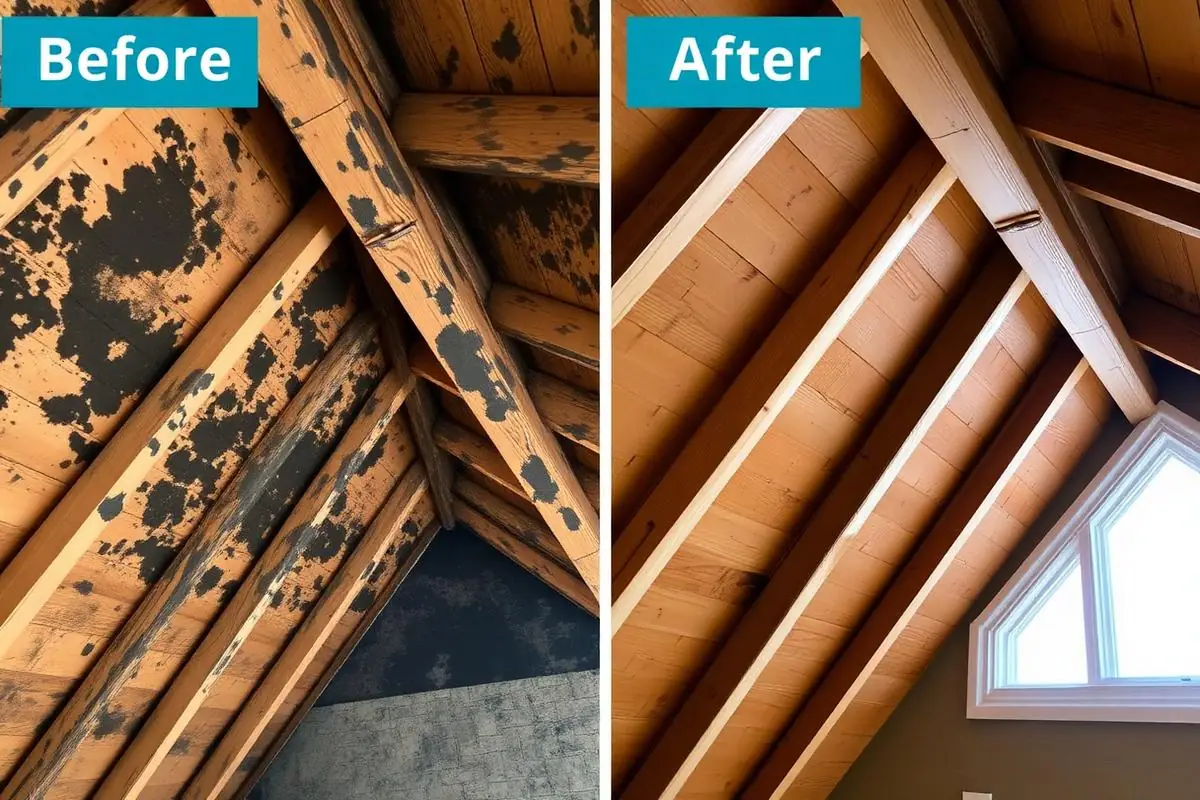
Attic sheathing, Edina
Ventilation issue corrected, sheathing treated and sealed.
5-Star Reviews
Trusted across the Twin Cities
4.9from 380+ local homeowners
"Honest pricing and no scare tactics. Other companies wanted $8k, these guys did the job properly for less than half that and showed me the lab results."
"We had attic mold from an old roof leak. The team handled insurance paperwork and the workmanship warranty gave us real peace of mind selling the house."
Service Area
Serving Minneapolis & the Twin Cities Metro
Locally owned. Same-day response across the metro, no out-of-state subcontractors, ever.
FAQ
Common questions, straight answers
Can mold under my three-season porch get into the house?+
Yes. Air from a crawl space can move up through subfloor gaps, rim joists, pipe holes, and wall cavities. In Minneapolis homes with enclosed porches or rear additions, that stack effect can carry musty air into the room above.
Do you remove the old crawl space insulation too?+
If the fiberglass is wet, moldy, or packed with rodent debris, it needs to come out. Insulation between joists can trap moisture against the subfloor, which is a common issue under porch additions and short crawl spaces.
Is a vapor barrier enough to fix crawl space mold?+
A vapor barrier helps only after the mold and wet materials are dealt with. We clean the joists and subfloor first, remove bad plastic and insulation, then install a thick liner sealed to the walls so soil moisture is cut off.
Will my Minneapolis crawl space need a dehumidifier?+
Some crawl spaces do fine with encapsulation and passive vents if the wood and air readings stay dry. If the space has poor airflow, wet soil, or high summer humidity, a small crawl space dehumidifier with a drain line is often the better choice.
Not sure where to start? Most homeowners book a mold inspection first, then move into full mold remediation once we know the scope. Want prices first? See Minneapolis mold removal cost. Specialty scopes like crawl space mold removal are common in older homes. Neighborhood pages like East Richfield, Richfield mold removal walk through what we see block by block. Suburb work starts with Minneapolis homeowners.
Browse the site
Everything we cover for Minneapolis homeowners
Pricing by job type, neighborhood-specific pages, and specialty scopes. Pick what looks like your situation.
Pricing
2026 Minneapolis mold pricing guides
Neighborhoods
Minneapolis neighborhood mold removal
- Nokomis
- Northeast Minneapolis
- Powderhorn
- Linden Hills
- Camden
- Uptown
- Kenwood
- Longfellow
- Whittier
- Loring Park
- Marcy-Holmes
- Como
- Prospect Park
- Seward
- Cedar-Riverside
- Bryn Mawr
- Fulton
- Kingfield
- Standish-Ericsson
- Windom
- Highland Park, St. Paul
- Mac-Groveland, St. Paul
- Como (St. Paul), St. Paul
- Morningside, Edina
- Country Club, Edina
- Cahill, Edina
- Elmwood, St. Louis Park
- Fern Hill, St. Louis Park
- Browndale, St. Louis Park
- East Richfield, Richfield
- West Richfield, Richfield
- Central Richfield, Richfield
- East Bloomington, Bloomington
- West Bloomington, Bloomington
- Oxboro, Bloomington
- The Preserve, Eden Prairie
- Hidden Ponds, Eden Prairie
- Bearpath, Eden Prairie
- Glen Lake, Minnetonka
- Groveland, Minnetonka
- Burwell, Minnetonka
- Bass Lake, Plymouth
- Parkers Lake, Plymouth
- Medicine Lake, Plymouth
- Arbor Lakes, Maple Grove
- Rush Creek, Maple Grove
- Weaver Lake, Maple Grove
- Cedar Grove, Eagan
- Lexington-Diffley, Eagan
- Central Park, Eagan
- Heart of the City, Burnsville
- Sunset Pond, Burnsville
- Southcross, Burnsville
- Powers Lake, Woodbury
- Wedgewood, Woodbury
- Stonemill Farms, Woodbury
- Central Park, Roseville
- Owasso, Roseville
- Langton Lake, Roseville
Specialty jobs
Specialty mold services in Minneapolis
Mold won't wait. Neither do we.
Call now for a free inspection. A certified Minneapolis technician will be at your door, often the same day.