"Called at 9 PM after finding black mold in our basement. They were here the next morning, walked us through everything, and the air smelled fresh again within days."

black mold removal pricing
Black mold removal cost in Minneapolis
Black mold (Stachybotrys) removal costs more than regular mold. Real Minneapolis price ranges, why it's higher, and what your quote should include.
- 24/7 emergency response
- IICRC certified team
- Licensed & fully insured
- 5-star local reviews
IICRC Certified
Licensed & Insured
24/7 Emergency Service
Free Inspection
Stachybotrys removal in Minneapolis usually runs 30 to 60 percent higher than a standard mold job. The cost jumps because the crew needs tighter PPE, negative-air containment, sealed waste handling, and third-party clearance testing before the space is called clean.
For 2026, a small bathroom job may land around $2,200 to $5,500. A medium basement wall job often runs $6,000 to $14,000. A whole-basement or whole-home job can reach $18,000 to $60,000 or more, based on how far the water moved and how much material has to come out.
2026 black mold cost ranges by Minneapolis job size
A small bathroom Stachybotrys job is often tied to a bad bath fan, a leaking toilet flange, or wet drywall behind a tile surround. In a 1920s South Minneapolis home, that may mean removing drywall, trim, vanity panels, and part of the subfloor. Most small jobs run $2,200 to $5,500 with containment and clearance testing.
A medium basement wall job costs more because old framing, insulation, and paneling trap water. In basements near Minnehaha Creek, Nokomis, or Northeast, we often see mold behind finished walls after seepage or a cracked laundry line. Plan on $6,000 to $14,000 for a contained wall removal, HEPA cleaning, drying, and clearance.
Large jobs, like a full basement after a sewer backup or supply line break, can run $18,000 to $60,000 or more. Whole-home work costs more if HVAC ducts, attic sheathing, or several floors were affected.
Why Stachybotrys costs 30 to 60 percent more than generic mold
Stachybotrys is handled more carefully because it grows on wet cellulose materials, mainly drywall paper, wood fiberboard, ceiling tile, and paper-faced insulation. It is common after a slow leak that stays wet for weeks, not a one-day spill that was dried fast.
The higher cost comes from labor and controls. Crews wear stricter PPE, often full-face respirators, taped suits, gloves, and boot covers. The work area gets plastic containment, a zipper door, and negative-air machines with HEPA filters, so dust and spores do not move into clean rooms.
Waste also costs more. Contaminated drywall, insulation, and carpet pad must be bagged inside the work zone, wiped down, and tracked for disposal. A normal mold cleanup may end with a visual check. A black mold job should not.
What a real black mold quote should include
A proper quote should show photos of the affected materials, not just a square-foot number. It should list moisture readings from a meter, with notes on the wall, sill plate, subfloor, or ceiling cavity that tested wet. If the reading is high, the quote should say what gets opened and what stays in place.
The containment plan should be clear. Look for the size of the work zone, the negative-air setup, the number of air scrubbers, and how clean rooms will be protected. The quote should also state what PPE the crew will use and how debris will be sealed before it leaves the house.
Ask for a disposal manifest and third-party clearance testing in writing. Clearance should come from an outside tester, not the same crew that did the removal. That protects you, your buyer, and your insurance file.
Our Process
How we remove mold safely, in 4 steps
No guesswork. No upsells. A clear, certified process from first call to final clearance test.
1. Call or Request Quote
Tell us what you're seeing. We respond in 15 minutes or less, 24/7.
2. Free On-Site Inspection
A certified technician inspects, tests, and identifies the source.
3. Containment & Removal
We seal off the area, remove contaminated materials, and HEPA scrub the air.
4. Clearance & Warranty
Final air test confirms safe air quality. Workmanship warranty included.
Real Minneapolis Jobs
Before & after
Local homes, real results. Every job documented with photos, lab reports, and clearance testing.
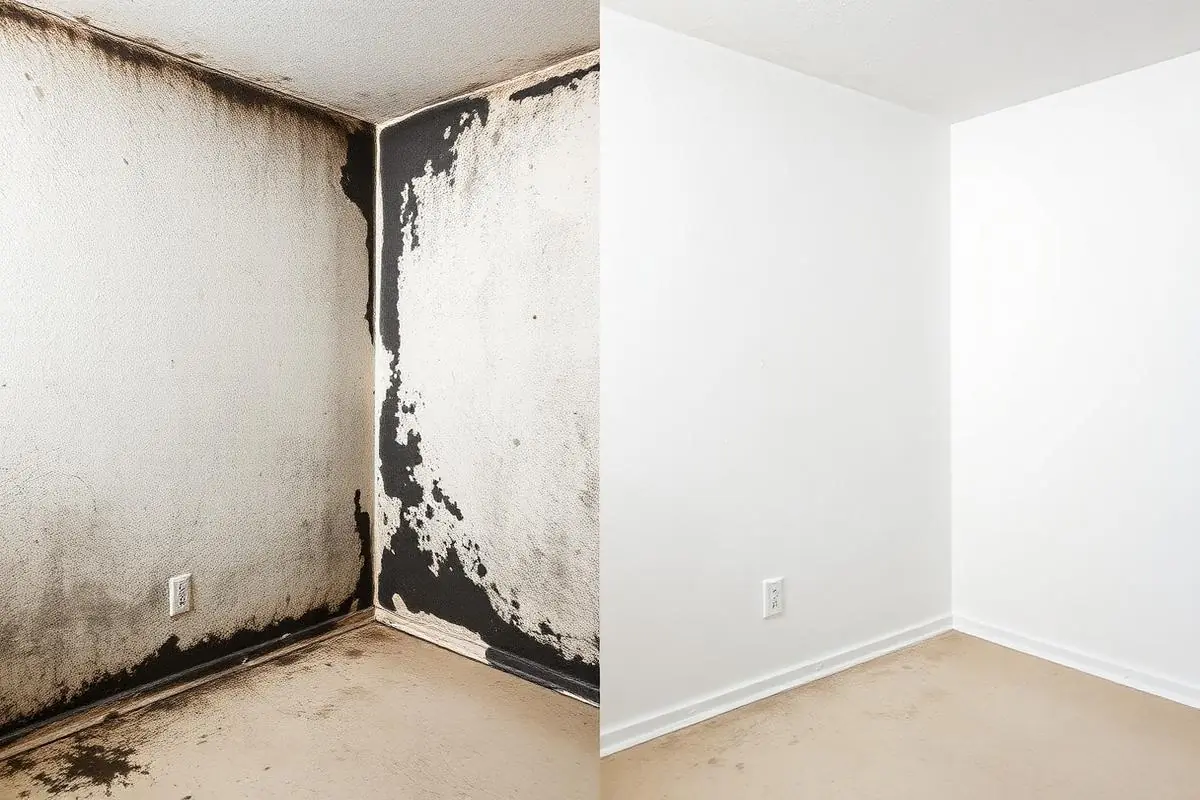
Basement drywall, South Minneapolis
Heavy mold removed and surface restored after spring flooding.
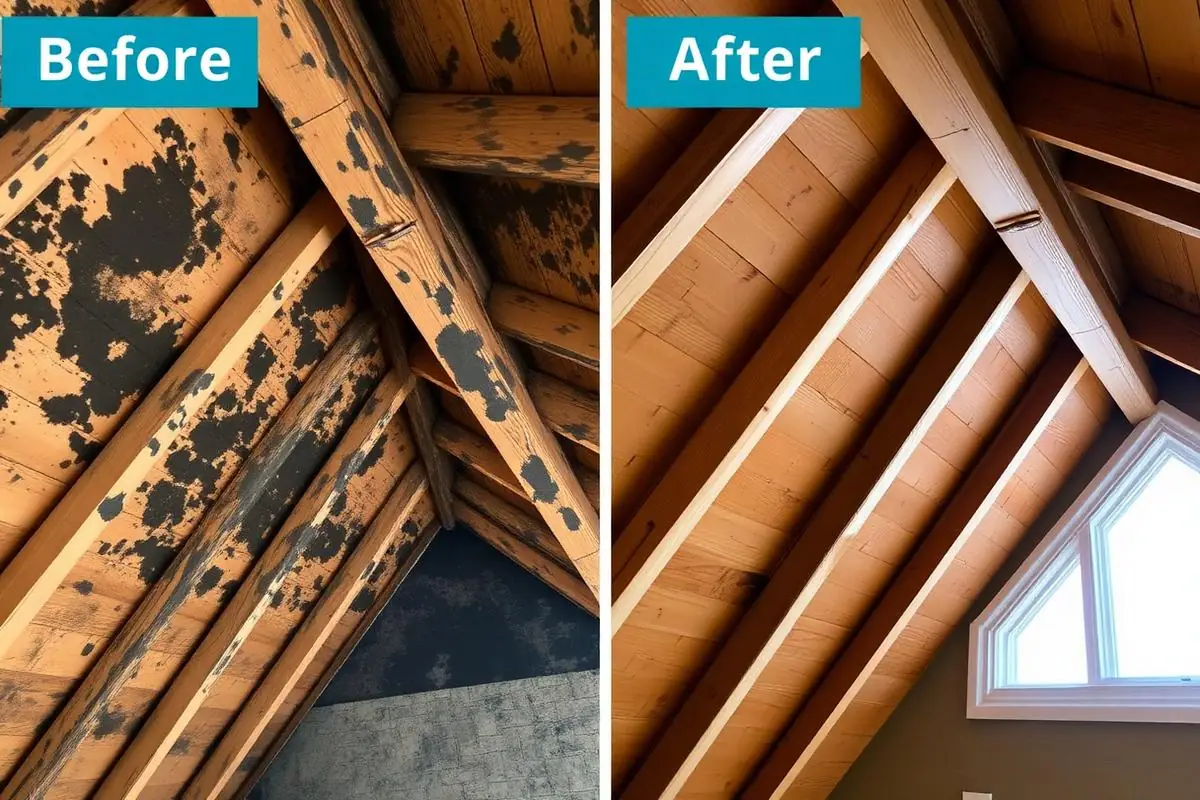
Attic sheathing, Edina
Ventilation issue corrected, sheathing treated and sealed.
5-Star Reviews
Trusted across the Twin Cities
4.9from 380+ local homeowners
"Honest pricing and no scare tactics. Other companies wanted $8k, these guys did the job properly for less than half that and showed me the lab results."
"We had attic mold from an old roof leak. The team handled insurance paperwork and the workmanship warranty gave us real peace of mind selling the house."
Service Area
Serving Minneapolis & the Twin Cities Metro
Locally owned. Same-day response across the metro, no out-of-state subcontractors, ever.
FAQ
Common questions, straight answers
How much does black mold removal cost in Minneapolis in 2026?+
Most Stachybotrys jobs in Minneapolis cost 30 to 60 percent more than generic mold removal. A small bathroom may run $2,200 to $5,500, a basement wall may run $6,000 to $14,000, and a whole basement or whole home can run $18,000 to $60,000 or more.
Why is Stachybotrys more expensive than other mold?+
The job needs tighter controls. Crews use stricter PPE, negative-air containment, HEPA filtration, sealed disposal, and third-party clearance testing. Those steps add labor, equipment time, and testing fees.
Will homeowners insurance pay for black mold removal in Minneapolis?+
Many policies cover black mold if it came from a covered water loss, like a burst pipe, failed water heater, or sudden appliance leak. They often deny mold tied to long-term seepage, poor grading, or a roof leak that was left alone. Photos, moisture readings, and a clear cause of loss help the claim.
What should I look for in a black mold quote?+
The quote should include job photos, moisture readings, a containment plan, PPE notes, a disposal manifest, and third-party clearance testing. If a contractor only gives one flat price and no plan for negative air or clearance, the quote is missing key parts of a Stachybotrys job.
Not sure where to start? Most homeowners book a mold inspection first, then move into full mold remediation once we know the scope. Want prices first? See Minneapolis mold removal cost. Specialty scopes like crawl space mold removal are common in older homes. Neighborhood pages like East Richfield, Richfield mold removal walk through what we see block by block. Suburb work starts with Minneapolis homeowners.
Browse the site
Everything we cover for Minneapolis homeowners
Pricing by job type, neighborhood-specific pages, and specialty scopes. Pick what looks like your situation.
Pricing
2026 Minneapolis mold pricing guides
Neighborhoods
Minneapolis neighborhood mold removal
- Nokomis
- Northeast Minneapolis
- Powderhorn
- Linden Hills
- Camden
- Uptown
- Kenwood
- Longfellow
- Whittier
- Loring Park
- Marcy-Holmes
- Como
- Prospect Park
- Seward
- Cedar-Riverside
- Bryn Mawr
- Fulton
- Kingfield
- Standish-Ericsson
- Windom
- Highland Park, St. Paul
- Mac-Groveland, St. Paul
- Como (St. Paul), St. Paul
- Morningside, Edina
- Country Club, Edina
- Cahill, Edina
- Elmwood, St. Louis Park
- Fern Hill, St. Louis Park
- Browndale, St. Louis Park
- East Richfield, Richfield
- West Richfield, Richfield
- Central Richfield, Richfield
- East Bloomington, Bloomington
- West Bloomington, Bloomington
- Oxboro, Bloomington
- The Preserve, Eden Prairie
- Hidden Ponds, Eden Prairie
- Bearpath, Eden Prairie
- Glen Lake, Minnetonka
- Groveland, Minnetonka
- Burwell, Minnetonka
- Bass Lake, Plymouth
- Parkers Lake, Plymouth
- Medicine Lake, Plymouth
- Arbor Lakes, Maple Grove
- Rush Creek, Maple Grove
- Weaver Lake, Maple Grove
- Cedar Grove, Eagan
- Lexington-Diffley, Eagan
- Central Park, Eagan
- Heart of the City, Burnsville
- Sunset Pond, Burnsville
- Southcross, Burnsville
- Powers Lake, Woodbury
- Wedgewood, Woodbury
- Stonemill Farms, Woodbury
- Central Park, Roseville
- Owasso, Roseville
- Langton Lake, Roseville
Specialty jobs
Specialty mold services in Minneapolis
Mold won't wait. Neither do we.
Call now for a free inspection. A certified Minneapolis technician will be at your door, often the same day.